[Canon Canonet QL17] Learn About Pricing, Specifications, Reviews, and User Opinions (With Hong Kong Buying Locations)

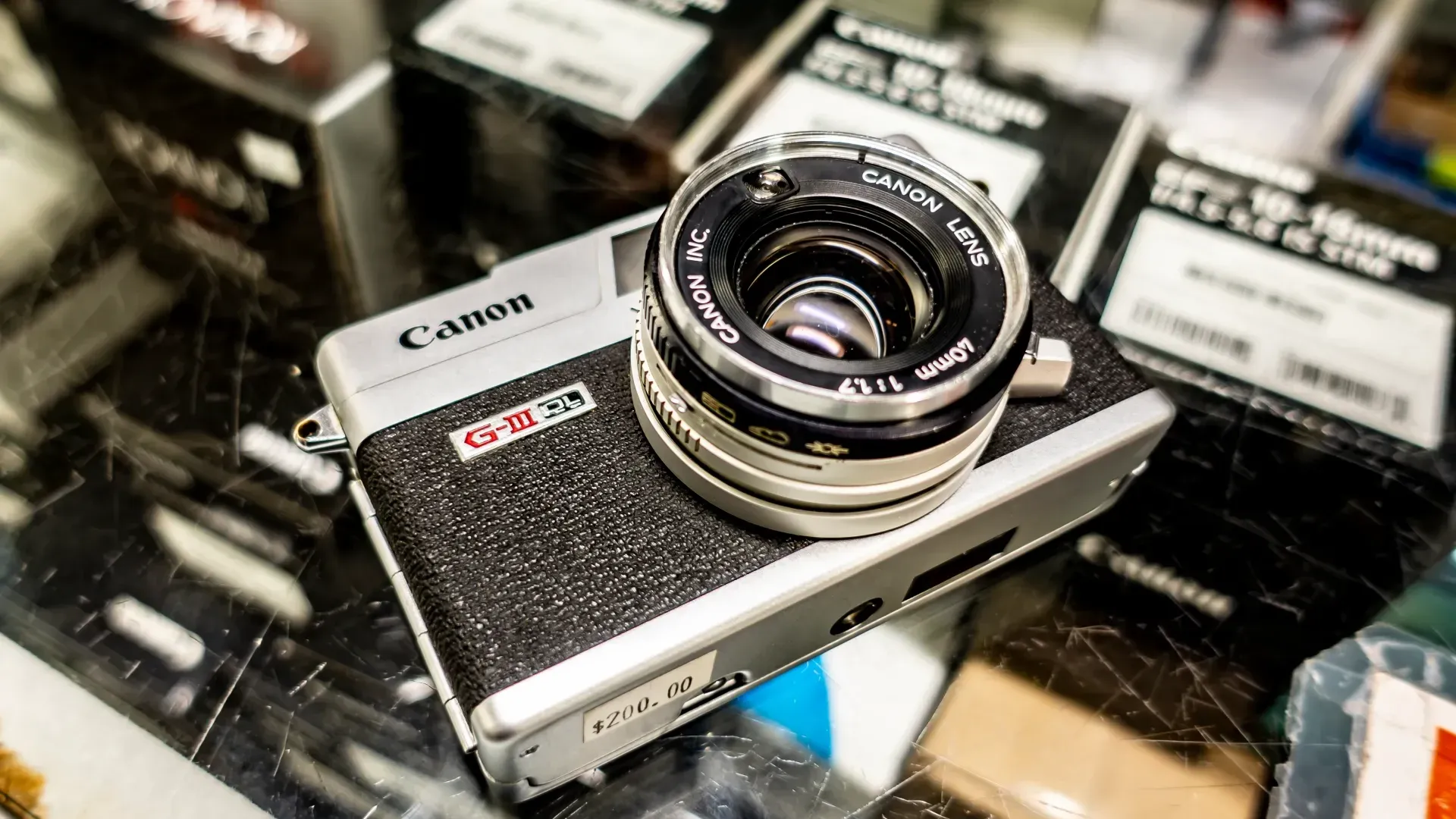
The Canon Canonet QL17 (1969 new version) is a classic 35mm film rangefinder camera launched by Japan’s Canon, and a redesigned version of the original 1966 Canonet QL17, released in April/May 1969. The camera is renowned for its revolutionary Canon Auto Tuning System (CATS), lightweight and compact design, and a 40mm f/1.7 large‑aperture prime lens. It is often praised by photography enthusiasts as the “poor man’s Leica.” The 1969 version is especially admired for its quiet leaf shutter, excellent optical quality, and mechanical reliability. With the resurgence of film photography, it has regained attention and become a collectible camera among street photographers and film enthusiasts.
When Was the Canon Canonet QL17 Released?
The Canon Canonet series began in January 1961 with the original Canonet camera, marking Canon’s entry into the affordable rangefinder market. The first Canonet QL17, released in 1966, introduced the revolutionary Quick Loading (QL) film-loading mechanism and a CdS exposure metering system. The “New Canonet QL17” (1969 version), which is the focus of this article, was launched in April/May 1969. Compared with the previous model, it was 20 mm narrower, 4 mm shorter, and about 30% lighter. This version introduced the CATS automatic flash adjustment system, enabling fully automated day and night photography. In June 1970, the New Canonet QL17‑L (“L” for Luxury) was released, adding a battery check function in the viewfinder.
The final version, the Canonet G‑III QL17, was launched in spring 1972 and produced until summer 1982, with a total production of 1.2 million units, making it the best‑selling model in the series. Compared with instant film cameras such as the Polaroid Now i‑Type and Kodak MiniShot 3 Retro released in 2020, the Canon Canonet QL17 represents a completely different film photography philosophy—emphasizing mechanical reliability, optical quality, and manual control.
Specifications of the Canon Canonet QL17

The Canon Canonet QL17 (1969 original version) is a precision mechanical rangefinder camera known for its compact design and high‑end optics, with the following key specifications:
Lens and Optical System:
Equipped with a Canon 40mm f/1.7 prime lens featuring a multi‑element, coated optical glass design. The 40mm focal length (standard angle of view for 35mm film) sits between traditional 35mm and 50mm lenses, offering flexible composition. Aperture range from f/1.7 to f/16, with a minimum focusing distance of 0.8 m (about 2.6 ft). It uses a quiet leaf shutter (Copal SV), which is extremely silent compared to focal‑plane shutters and supports wide‑angle focusing. The optical design is sharp, especially between f/4 and f/5.6; at wide open f/1.7, noticeable corner vignetting exists (about 59% light loss). The lens is widely praised as “sharp.” While comparisons with Leica optics remain debated, its quality is universally acknowledged as excellent.
Film Loading and Shutter:
Canon Quick Loading (QL) system simplifies film loading, making incorrect loading almost impossible—an innovative design. Manual film advance (lever) and manual rewind (ratchet). The leaf shutter allows flash synchronisation at all shutter speeds (X‑sync). Shutter speeds: Bulb (B), 1/500, 1/250, 1/125, 1/60, 1/30, 1/15, 1/8, 1/4, 1 second, and 2 seconds. The shutter is mechanically reliable with no electronic dependency.
Revolutionary Flash System:
CATS (Canon Auto Tuning System) is a revolutionary automatic flash adjustment system first introduced in the 1969 version. The Canolite D compact flash integrates with the camera, eliminating the need for complex guide number calculations. Flash aperture is automatically set based on distance and flash output, enabling fully automated day and night photography. A standard hot shoe supports external flashes.
Exposure and Metering:
CdS (cadmium sulfide) light meter with high sensitivity and a wide metering range. Shutter‑priority automatic exposure mode: the user sets the shutter speed and the meter automatically selects the aperture. Film speed range ISO 25–800 (ASA dial). Meter readings are displayed in the viewfinder and integrated with the rangefinder patch. Manual exposure mode is available (without meter), suitable for Sunny 16 rule shooting. Fully mechanical operation allows normal use without batteries (manual mode only).
Viewfinder and Focusing:
Reverse Galilean optical rangefinder with a coupled rangefinder patch. Automatic parallax correction (frame lines adjust with focusing distance). Bright and spacious viewfinder, praised by users as “bright and large.” The rangefinder patch is clear and precise. Coupled rangefinder focusing with a short focus throw enables fast focusing and refocusing. Distance scale (meters and feet) visible on the lens barrel. Magnification: 0.6×.
Power and Battery:
Originally designed for a 1.35V PX625 mercury battery, now discontinued. Alternatives include 1.4V Wein (hearing aid) batteries with a brass adapter, SR44 batteries (with a Schottky diode adapter), or zinc‑air batteries. Without a battery, the camera operates fully mechanically in manual mode.
Body Design:
The 1969 version is 20 mm narrower, 4 mm shorter, and about 30% lighter than its predecessor, making it extremely compact. Magnesium alloy body construction. Made in Japan with precision industrial design. Standard 1/4‑inch tripod socket and hot shoe. Clean and elegant industrial aesthetics.
Price of the Canon Canonet QL17
As the 1969 original version has been discontinued for over 50 years and is rarer than the 1972 G‑III version, prices in Hong Kong are generally lower than the G‑III:
1969 Original New Canonet QL17:
- Very rare on the market; difficult to list individually
- Estimated second‑hand price: HK$1,000–1,500 (30–50% cheaper than G‑III)
- Original launch price: about ¥23,800 (approximately HK$3,200–3,800)
More Common G‑III Version (1972–1982) for Reference:
- Showa Store: HK$2,480 (various conditions)
- Treasure Hikari: HK$1,126.40 (promotion, original HK\(1,280)
- Carousell HK: HK$1,200 (lightly used)
- Etsy HK: HK$1,910–2,191 (professionally restored)
International Reference Prices:
- Kamerastore (Europe): €429–468 (about HK$3,325–3,615)
- Classic Cameras (Australia): AUD 325 (about HK$1,900)
Factors Affecting Value:
- Resurgence of film photography driving demand\
- 50‑year‑old camera with limited supply
- Condition directly affects value
- The original 1969 version is rarer than later models and may have greater appreciation potential
Review of the Canon Canonet QL17
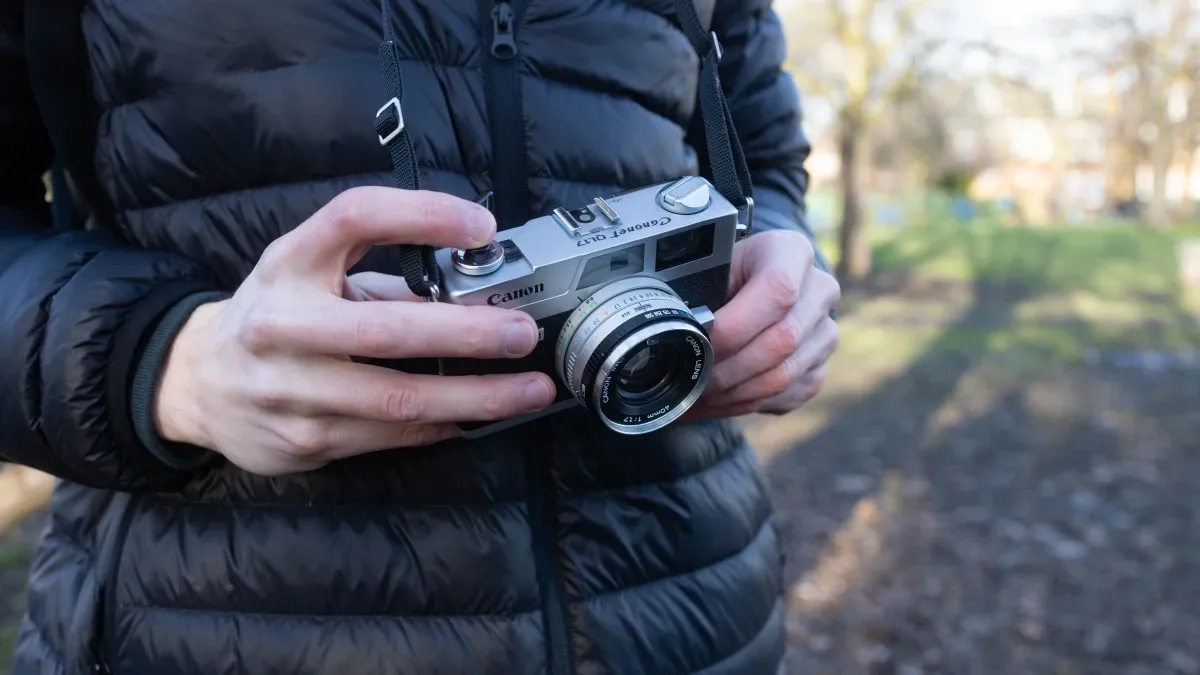
Professional reviews and the film photography community are highly positive about the Canonet QL17, particularly praising its optical quality and mechanical reliability, while also noting practical limitations:
Strengths:
The 40mm f/1.7 lens is rated as “sharp” and “excellent,” with many users praising its color rendering (color film) and contrast (black‑and‑white film). The quiet leaf shutter is a major advantage—the Copal SV shutter operates “almost silently,” making it ideal for street photography. The viewfinder is described as “bright” and “wide,” with a clear rangefinder patch, offering a more comfortable focusing experience than the Olympus XA (with its very small patch).
The QL film‑loading system eliminates the risk of incorrect loading. The CATS automatic flash system revolutionized night photography by removing the need for complex calculations. The coupled rangefinder focusing is fast and accurate, and the short focus throw enables quick refocusing. Overall, it is praised as a “street photography masterpiece” due to its compact size, silent operation, and reliable mechanics. Fully manual operation avoids electronic failure risks. Solid mechanical construction delivers the golden combination for street photography: “quick loading, easy focusing, small body, and silent shutter.”
Weaknesses and Limitations:
The most common complaint is the discontinued PX625 mercury battery—modern substitutes are required and can cause exposure inaccuracies (up to about 1.5 stops over‑ or under‑exposure). The metering system is considered “too slow to respond,” making it difficult in rapidly changing light. The maximum shutter speed of 1/500 s limits shooting fast film in bright light. The camera locks the shutter when exposure is out of range, preventing intentional over‑ or under‑exposure—users comment that they would “rather get a bad photo than no photo.”
The focusing ring position on the lower left side feels unusual at first. The viewfinder is relatively small, and filter effects cannot be previewed through it. The 40mm focal length “requires adjustment” for new users. The lens can produce “unpleasant flare” under certain conditions, especially backlighting. Dramatic shallow depth of field is limited due to the minimum focusing distance.
Overall, professional reviews conclude that it is “excellent for street photography, but limited in versatility.” Some reviewers note that they “seem to enjoy owning the camera more than actually using it.”
How Do Users Rate the Canon Canonet QL17?
Real user feedback reflects a mix of “mechanical enthusiasts love it, practical considerations require caution”:
Positive Feedback:
Reddit and forum users praise it as an “excellent camera with a sharp f/1.7 lens, solid build, and quick loading.” Street photographers say it “encourages experimentation” and is “a better street photography tool than a smartphone.” Many note that the red‑dot rangefinder patch “changes the experience,” and after frustration with smaller cameras like the Olympus XA, the QL17’s large viewfinder provides a sense of control and satisfaction. Image quality is described as “outstanding” with “punchy colors.” Long‑term users claim it is “worth the investment of money and time.”
Negative Feedback and Practical Issues:
Battery issues are the most common complaint, with users struggling with PX625 discontinuation and inaccurate exposure from substitutes. The metering system is often described as “unreliable” or “slow.” The 1/500 s top shutter speed limits shooting fast film in bright light. Some users say the camera “looks more enjoyable than it is to use.” Beginners find it “complex” with a “steep learning curve.”
Usage Recommendations:
Experienced users strongly recommend using manual exposure mode to avoid metering issues. Battery solutions should be planned in advance (Wein batteries or adapters). Beginners should allow room for trial and error when learning zone focusing. If purchasing, ensure the camera is fully functional, especially the meter and shutter. It is not suitable for casual users who “just want to press the shutter,” as it requires active photographic involvement.
Where to Buy the Canon Canonet QL17 in Hong Kong?
Due to the rarity of the 1969 original version, most Hong Kong retailers sell the more common G‑III version:
Official and Authorised Retailers:
- Showa Store (showa-store.com): Multiple Canonet G‑III units, HK\(2,480
- Treasure Hikari (treasurehikarihk.com): HK$1,126.40 promotion (G‑III)
Second‑Hand and Special Sources:
- Sunrise Photo (Sham Shui Po): Recommended on Reddit; multiple Canonets available, HK$500–2,000, film testing possible
- David Chan Company (Mong Kok, Champagne Court): Famous Hong Kong vintage camera dealer; highly recommended to inquire
- Carousell HK (carousell.com.hk): Canonet G‑III around HK$1,200
Online International Shopping:
- Etsy HK/International (etsy.com): HK$1,910–2,191 (professionally restored)
- Kamerastore (Europe): €429–468 (about HK$3,325–3,615)
Buying Advice: The 1969 original version is difficult to source locally. Recommended approaches include:
- Contact Sunrise Photo or David Chan Company directly to inquire about original-version stock
- Post an inquiry on Carousell (specifically requesting the 1969 original New Canonet QL17)
- Search internationally on Etsy for “1969 Canonet QL17” (shipping costs may be higher)
- Consider purchasing the G-III version as an alternative (more readily available, with similar optics and mechanics)
- Before purchasing, confirm that the battery system is functioning properly (most critical) and that the light meter works
- Set aside extra budget for a battery adapter and LR44 or Wein batteries
The Canon Canonet QL17 (original 1969 version) represents the golden age of film photography, combining excellent optics, quiet operation, and mechanical reliability. Despite modern challenges related to battery availability and metering systems, its suitability for street photography and overall camera charm remain unmatched. The purchasing decision should be based on a genuine love for mechanical film cameras and a commitment to street photography, rather than purely functional considerations. The rarity of the original 1969 version gives it collectible value and investment potential.
Preserve Your Precious Memories with Capture’s Photo Album Digitisation Service
Do you have a box full of old photographs, worried that they may fade or get damaged over time? Now, you can preserve these treasured memories by digitising them with Capture.HK’s professional photo album digitisation service. Our service allows you to convert your old photos into high-quality digital files, ensuring they are safely stored and easily shareable.
At Capture.HK, we use high-resolution scanning technology to restore your photos with sharp details and vibrant colours, maintaining their original quality. We also offer various file formats, making it easy for you to access and share them across different devices. Most importantly, we handle your photos with utmost care, ensuring they are safely processed and preserved.
The Frame Digital Photo Frame
Want to relive your digital memories every day? Capture’s The Frame digital photo frame is the perfect solution! Designed to showcase your most cherished moments, The Frame allows you to display a lifetime of memories in one elegant frame.
With its sleek design and high-resolution display, The Frame offers an effortless way to organise and enjoy your favourite photos. Simply digitise your photo collection, upload them to The Frame, and enjoy your memories anytime, anywhere.
Whether placed in the living room, bedroom, or office, The Frame adds a touch of warmth and personality to your space. More than just a decorative item, it’s a meaningful gift that brings your treasured moments to life.
Get The Frame today and enjoy your memories every day!
References:
Extended Readings:
Capture Reviews
Related Articles
You may also like these articles







Capture · Our team
Any Questions?
Feel free to contact
our Memory Specialists
Not sure what format you have or how best to handle it? WhatsApp us and one of the team will take a look.
WhatsApp us