The Guide to Photo Slides in 2026: History, Uses, Care and Ideas

Digitising your own collection? Slide Scanning in Hong Kong — prices and service details
Somewhere in many Hong Kong homes there is a small yellow or grey box rattling with 35mm slides: a parent's first trip to Japan, a cousin's wedding banquet, a beach day at Repulse Bay from decades ago. Nobody has owned a projector for years, so the box just sits in a cupboard. This guide explains what photo slides are, where they came from, why people loved them, and what you can do with yours today, from storing them safely in our humid climate to turning them into files the whole family can see.
What exactly is a photo slide?
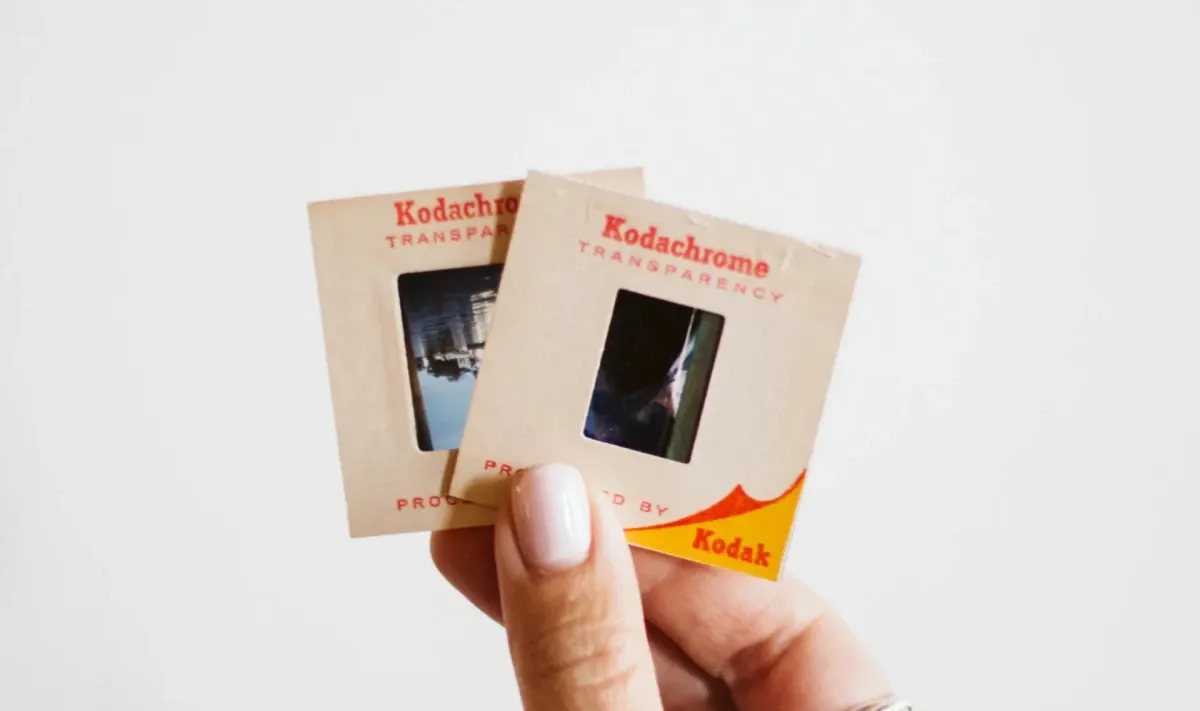
A slide is a positive image on transparent film, held in a small frame called a mount. Unlike a negative, the colours are already correct: hold it up to a window and you see the actual picture. Photographers call slide film "reversal" or "transparency" film for this reason. The image was meant to be seen with light shining through it, either in a handheld viewer or thrown onto a wall by a projector.
Most family slides are 35mm frames in square mounts about 5 cm (2 inches) wide, made of card or plastic. You may also come across larger medium-format slides or smaller ones from instant-load cameras, but 35mm is by far the most common.
A short history
Projecting pictures is older than most people expect. In the 19th century, "magic lantern" shows used images on glass plates, and photographic lantern slides appeared not long after photography itself was invented. They were heavy and fragile, but they let a lecturer show a photograph to a whole hall at once.
The slide as most families know it arrived with colour reversal film in the mid-1930s, when Kodachrome made bright, long-lasting colour images possible on 35mm film. Pre-mounted 35mm slides and affordable home projectors followed, and through the 1950s to the 1980s an evening "slide show" became a familiar way to share holiday photos. Other film companies brought out their own slide films, and some cameras used special formats with their own mount sizes.
Prints from colour negatives slowly took over for everyday snapshots, and digital cameras finished the job. Slide film is still made and has a loyal following among film photographers, but for most families the slide era ended years ago, leaving those boxes behind.

Why people chose slides
Big-screen viewing. Long before smart TVs, a projector let a whole room see a photo at once, life-size or bigger.
Rich colour and detail. Good slide film gives saturated colours and fine detail, which is why many professionals and keen amateurs preferred it.
Teaching and presenting. Schools, universities, churches and offices relied on slides for lectures, training and talks.
Compact archive. A carousel or box of slides held a whole trip in less space than a stack of albums.
The problem with keeping slides in Hong Kong
Slides are tougher than prints in some ways, but they are not built for a flat where the humidity sits above 80% for much of spring and summer. The film emulsion feeds mould, which grows as fine webs or spots that eat into the image. Card mounts soak up moisture and can warp. Colours shift as the dyes fade, and some older films drift towards a red or magenta cast.
A few habits help:
Keep slides in a dehumidified room or a dry cabinet (防潮箱), or in an air-tight box with fresh silica gel.
Store them away from windows, air-conditioner drips and the floor, especially before typhoon season and black rain warnings.
Hold slides by the mount, never the film, and keep them out of direct sunlight.
Check the box once or twice a year. If you see white or grey threads on the film, separate those slides from the rest and get them scanned sooner rather than later.
Bringing slides into the digital age
Once a slide is scanned, the image no longer depends on a fragile piece of film. You can view it on a phone or TV, share it with relatives overseas, order prints at a photo shop, and back it up in more than one place. You have two main routes.
Scanning slides yourself
Dedicated film scanners and flatbed scanners with a transparency lid can do a reasonable job, and second-hand units turn up in places like Sham Shui Po. Expect to spend time cleaning dust, adjusting colour and scanning one batch after another. For a few dozen slides this is a pleasant weekend project. For several hundred, it can take months.

Using a professional service
A specialist will scan in bulk with proper equipment and correct the most common problems for you. At Capture HK, slides start from HK$6 each and come back as high-resolution JPG files with dust and colour correction. You can drop them at our Central or Lai Chi Kok store, book door-to-door collection, or send them by SF Express, and choose to get the files on a USB, in Google Photos, or both.
Keeping your digital copies safe
A scan is only as safe as the drive it sits on. Keep at least two copies in different places, for example a USB at home and a copy in a cloud service such as Google Photos. Name folders by year or event ("1978 Japan trip", "1985 wedding") so relatives can find things without asking you.
It is also worth keeping the original slides if they matter to you. Scanning doesn't harm them, and some people like having the physical objects. Just store them dry, as above.
Creative ways to use old slides
A family slideshow night. Put the scans on a smart TV for Lunar New Year or a birthday and let the older generation tell the stories behind each picture.
A digital photo frame. Load a rotating selection so the photos are part of daily life instead of hidden in a box.
Prints and photo books. Enlargements from a good scan make lovely gifts for grandparents or for relatives living abroad.
Light-box crafts. Slides with no family value, such as duplicate scenery shots, can become window hangings, lampshade panels or framed collages that glow in the light.
Throwback posts. Share a few scans on social media or in the family group chat and see who recognises the people and places.
Common questions
Are slides the same as negatives?
No. Slides show a normal positive image; negatives show reversed colours and are normally turned into prints. Both can be scanned.
Can I still get my slides printed?
Yes. Have them scanned first, then take the files to any photo printing shop or kiosk.
My slides have mould. Is it too late?
Not necessarily. Scan them as soon as you can, because mould keeps spreading. Dust and colour correction during scanning can improve how the images look, though damage that has eaten into the film can't always be removed fully.
Ready to digitise your slides?
If a box of slides has been waiting in the cupboard for years, now is a good time to give those pictures a second life. See plans and prices on our slides and negatives page, get an estimate with our free quote, or look at our photo scanning if you have albums to do as well.
Capture Reviews
Related Articles
You may also like these articles

Capture · Our team
Any Questions?
Feel free to contact
our Memory Specialists
Not sure what format you have or how best to handle it? WhatsApp us and one of the team will take a look.
WhatsApp us