The First Silent Film and 15 Silent-Era Classics Worth Watching

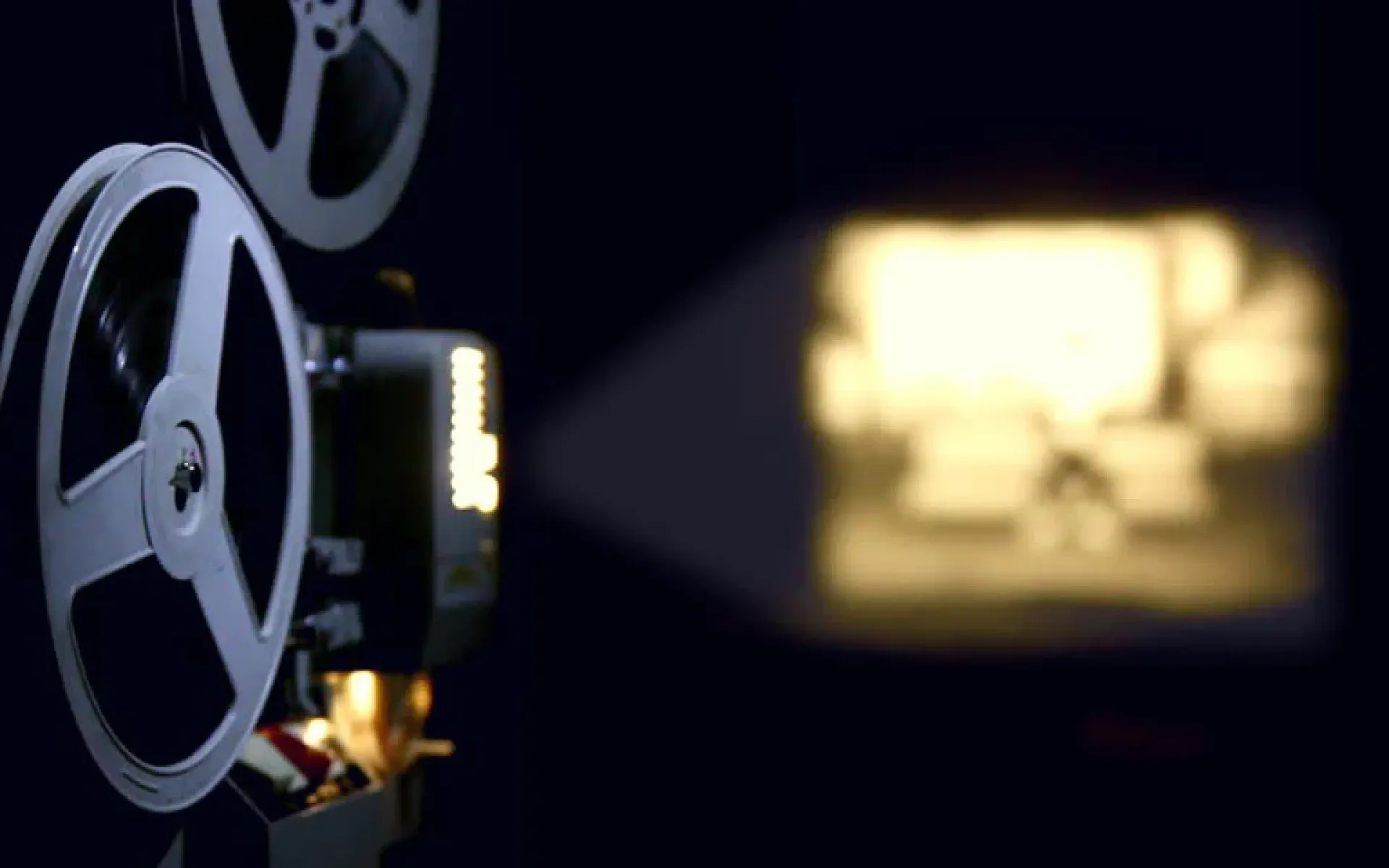
Before films could talk, audiences in Paris, Berlin, Shanghai and Hong Kong sat in the dark watching stories told entirely through faces, movement and the odd line of printed text, usually with a pianist or small band playing along. That silent era lasted a little over three decades, yet it invented most of the screen language we still use. So which was the first silent film, and which titles from those years are worth your time today? Here is a short history and fifteen landmarks, in roughly the order they shaped cinema.
How moving pictures began
Several inventors in Europe and the United States were chasing the same idea in the 1880s and 1890s: capture a rapid series of photographs on a flexible strip, then show them fast enough that the eye sees motion. Flexible celluloid roll film, which reached the market around the end of the 1880s, made it practical.
The moment usually treated as the birth of cinema as a public event came on 28 December 1895, when the Lumière brothers charged admission for a programme of short films in a Paris café. Within a couple of years, travelling showmen were screening films across Asia, Hong Kong included.
"Silent" never meant quiet. Picture houses hired musicians, some had narrators, and in parts of Asia live commentators who explained the story became stars in their own right. What was missing was recorded, synchronised dialogue. That arrived for feature films with The Jazz Singer in 1927, and within a few years the talkies had taken over.
Fifteen silent films that changed cinema
Roundhay Garden Scene (1888)

Shot by the French inventor Louis Le Prince in Leeds, England, this clip of a few people walking in circles in a garden lasts around two seconds. It is generally accepted as the oldest surviving motion picture, which is why it is often called the first film of all. Le Prince vanished on a train journey in 1890 before he could show his work publicly, one of early cinema's lasting mysteries.
A Trip to the Moon (1902)

Georges Méliès was a stage magician before he was a filmmaker, and it shows. His short fantasy sends a group of astronomers to the Moon in a capsule fired from a giant cannon. The shot of the capsule lodged in the Moon's eye is one of the most recognised images in film history. Méliès used stop tricks, multiple exposures and hand-coloured frames, effectively inventing screen special effects.
The Great Train Robbery (1903)

Edwin S. Porter's Western for the Edison company runs around twelve minutes and cuts between different places to follow a robbery, a chase and a shoot-out. Audiences had rarely seen a story built from separate scenes like this. Its final shot, an outlaw firing straight at the camera, was so popular that exhibitors could choose to show it at the start or the end.
The Birth of a Nation (1915)

D. W. Griffith's three-hour epic is studied for two opposite reasons. Technically it was a leap forward in scale, editing and battle scenes. Its story, though, glorifies the Ku Klux Klan and is openly racist, and it drew protests when it opened. It is worth knowing about as a warning of how powerful, and how harmful, the new medium could be.
Intolerance (1916)

Griffith's next project was even bigger. It weaves together four stories set centuries apart, from ancient Babylon to modern America, cutting between them to make a single argument about prejudice. The huge Babylon sets became legendary, and the cross-cutting between eras influenced filmmakers for decades, even though the film lost money.
The Cabinet of Dr. Caligari (1920)

Robert Wiene's German horror film is the textbook example of Expressionism: crooked painted sets, slanted doorways and shadows drawn straight onto the walls. The distorted world reflects a disturbed mind, and the twist ending was copied for the rest of the century.
Nosferatu (1922)

F. W. Murnau's vampire film was an unauthorised take on Bram Stoker's Dracula, with names changed. Stoker's widow sued and won, and a court ordered prints destroyed. Copies survived anyway, and Max Schreck's rat-like Count Orlok remains one of the eeriest figures ever filmed.
Battleship Potemkin (1925)

Sergei Eisenstein's Soviet film about a naval mutiny is the classic lesson in montage: building emotion through the rhythm and collision of short shots. The massacre on the Odessa Steps, with its runaway pram, has been quoted and parodied by directors ever since.
The Gold Rush (1925)

Charlie Chaplin's Little Tramp heads to the Klondike in search of gold and finds hunger, blizzards and heartbreak instead. Two scenes are famous worldwide: the starving Tramp cooking and eating his boot, and the little dance he performs with two bread rolls on forks.
The General (1926)

Buster Keaton plays a train driver chasing his stolen locomotive during the American Civil War. Keaton did his own stunts on real moving trains, and the deadpan comedy sits alongside genuine danger. It flopped on release; today critics regularly rank it among the best comedies ever made.
Metropolis (1927)

Fritz Lang's vision of a future city split between rich towers and underground workers gave the screen its first great robot. The film was heavily cut after its premiere, and for decades the full version was thought lost. A worn copy containing much of the missing footage turned up in Buenos Aires in 2008, and a restoration followed.
Sunrise: A Song of Two Humans (1927)

Murnau's first American film is a simple story of a farmer, his wife and a temptation from the city, told with gliding camera moves and dreamlike superimpositions. At the first Academy Awards it won an award for unique and artistic production, and Janet Gaynor won Best Actress partly for this role.
The Passion of Joan of Arc (1928)

Carl Theodor Dreyer told the trial of Joan of Arc almost entirely in close-ups, and Renée Falconetti's face carries the film. The original negative was lost to fire, and for years only compromised versions circulated. A complete print was found in a cupboard at a hospital in Norway in 1981, an unlikely rescue that shows how fragile film is.
The Wind (1928)

Directed by the Swedish filmmaker Victor Sjöström, this MGM drama follows a young woman worn down by endless dust storms on the American prairie. Lillian Gish gives one of the finest performances of the era, and the howling, sand-filled scenes show how much atmosphere silent film could create without a single spoken word.
City Lights (1931)

By 1931 the talkies had won, but Chaplin still made City Lights without dialogue, adding only music and sound effects he composed and arranged himself. The Tramp falls for a blind flower seller and goes to great lengths to pay for an operation to restore her sight. Its final close-up is often called one of the most moving endings in cinema.
Hong Kong's own silent years
Hong Kong made silent films too. Zhuangzi Tests His Wife (1913), with Lai Man-wai behind it and acting in it, is often named as the first Hong Kong film, and Lai is widely called the father of Hong Kong cinema. Very little of the city's silent output survives, which is a reminder that film left in a hot, humid place for decades rarely makes it.
How to watch silent films today
Restored releases: many of the titles above are available in restored versions with new music, on streaming services and disc.
Public domain copies: older films often circulate online for free, though quality varies a lot. Look for restored versions where you can.
Screenings with live music: film archives and festivals, including the Hong Kong Film Archive in Sai Wan Ho, sometimes show silent classics on the big screen.
Start with something short and lively, such as A Trip to the Moon or The General, before taking on a long drama.
Your family's silent films
Many families have silent films of their own. Most 8mm and Super 8 home movies from the 1960s and 1970s were shot without sound: birthday parties, trips to Repulse Bay, a wedding banquet, a first walk. Like the classics above, these reels fade, shrink and grow mould, especially in Hong Kong's damp summers. If you have a box of them, our film digitisation service scans 8mm, Super 8 and 16mm reels and turns them into video files you can watch and share. You can also get a free quote before you send anything.
Capture Reviews
Related Articles
You may also like these articles



Capture · Our team
Any Questions?
Feel free to contact
our Memory Specialists
Not sure what format you have or how best to handle it? WhatsApp us and one of the team will take a look.
WhatsApp us