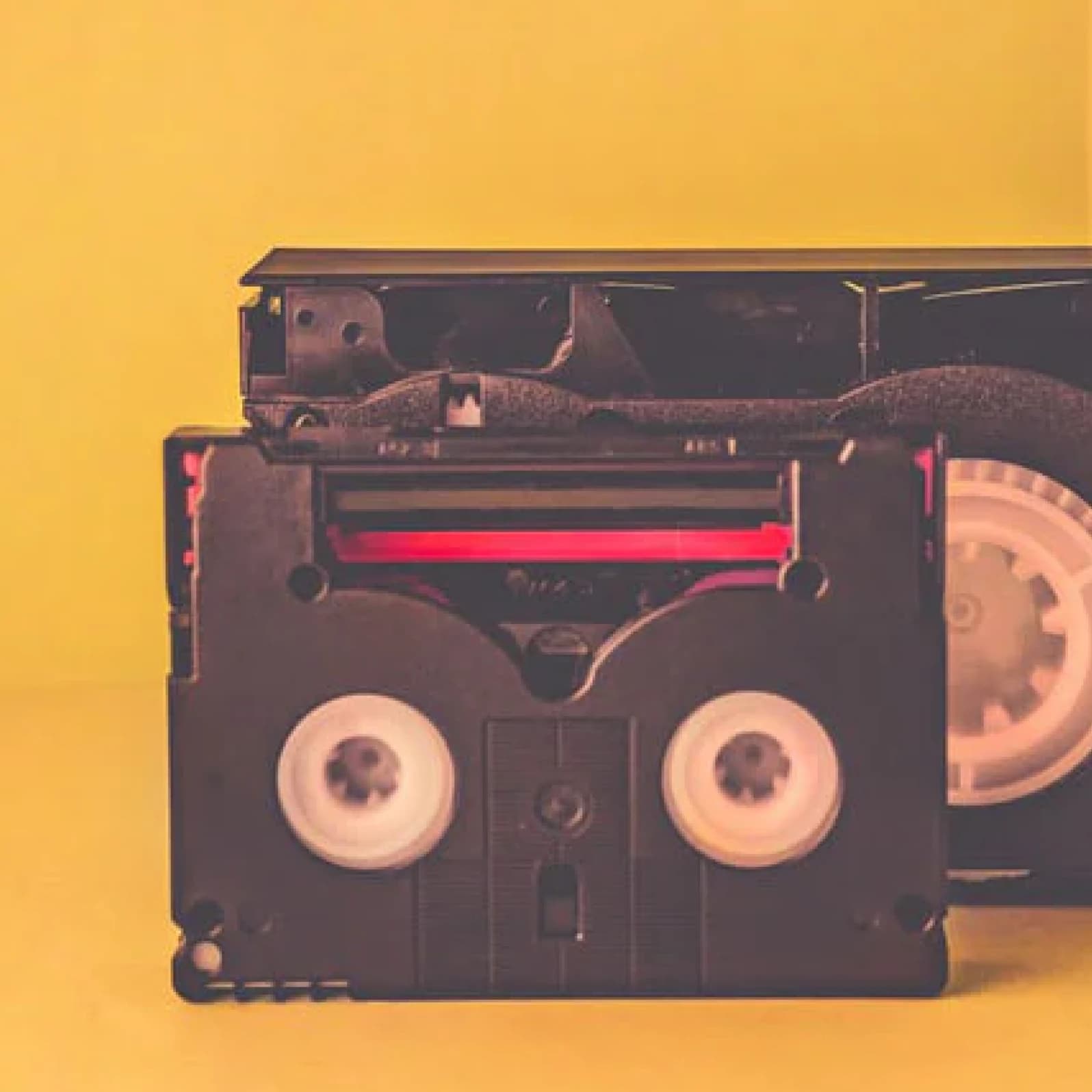
A palm-sized cassette of 8mm-wide tape. Through the 90s, holidays and first steps were filmed on a Handycam and saved to Hi8.
- year released
- 1989
- released by
- Sony
- max. recording length
- 3 h LP (PAL) · 4 h LP (NTSC)
- resolution
- ~400 lines
- Hi8 Case Dimensions
- 95 × 62.5 × 15 mm
- Tape width
- 8 mm
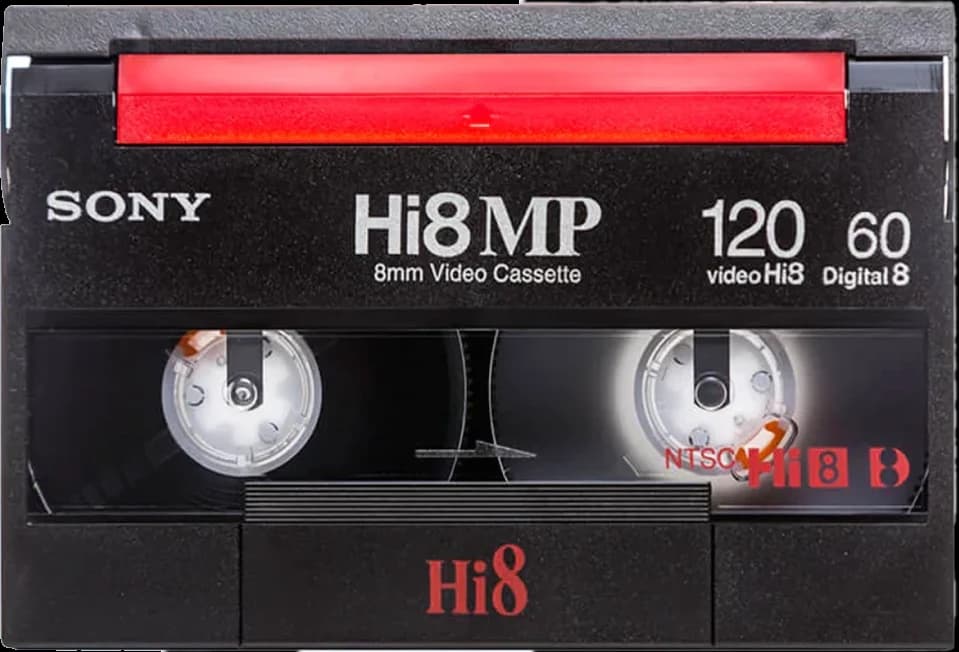
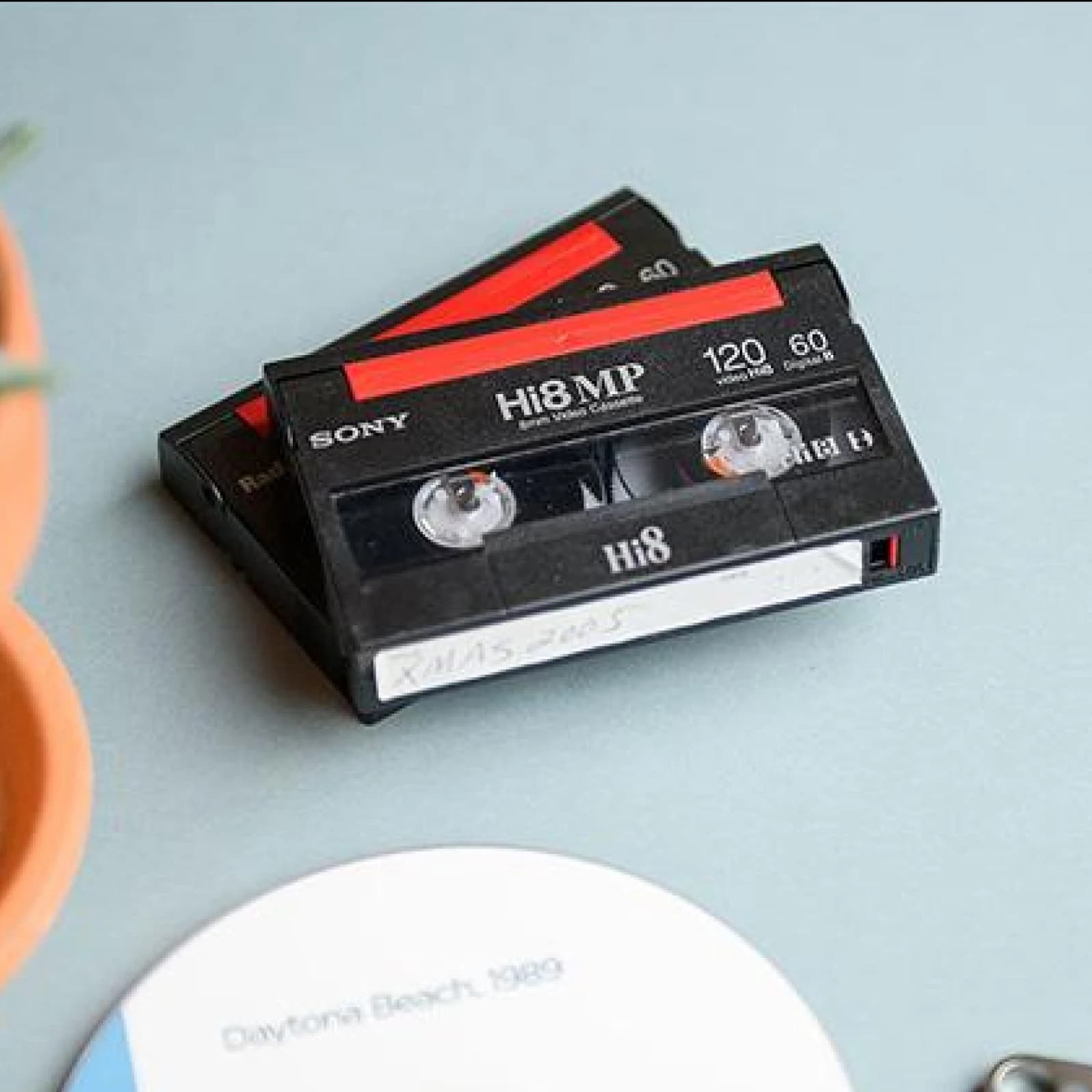
Fig. 1 — A Sony Hi8 MP 8mm cassette
§ 01 — Timeline
A short life of 8mm video
 1984
 1989
 1999
 2007
- Today
1984 · 1 / 5
Video8 is born
Drafted by Sony, JVC, Philips and others, the 8mm video format launched in 1984. Its cassette was far smaller than VHS, so camcorders could finally be held in one hand.
§ 02 — Introduction of the 8mm Video Format
The 8mm Format
The 8mm Format
What is Hi8?
§ 03 — The tape family
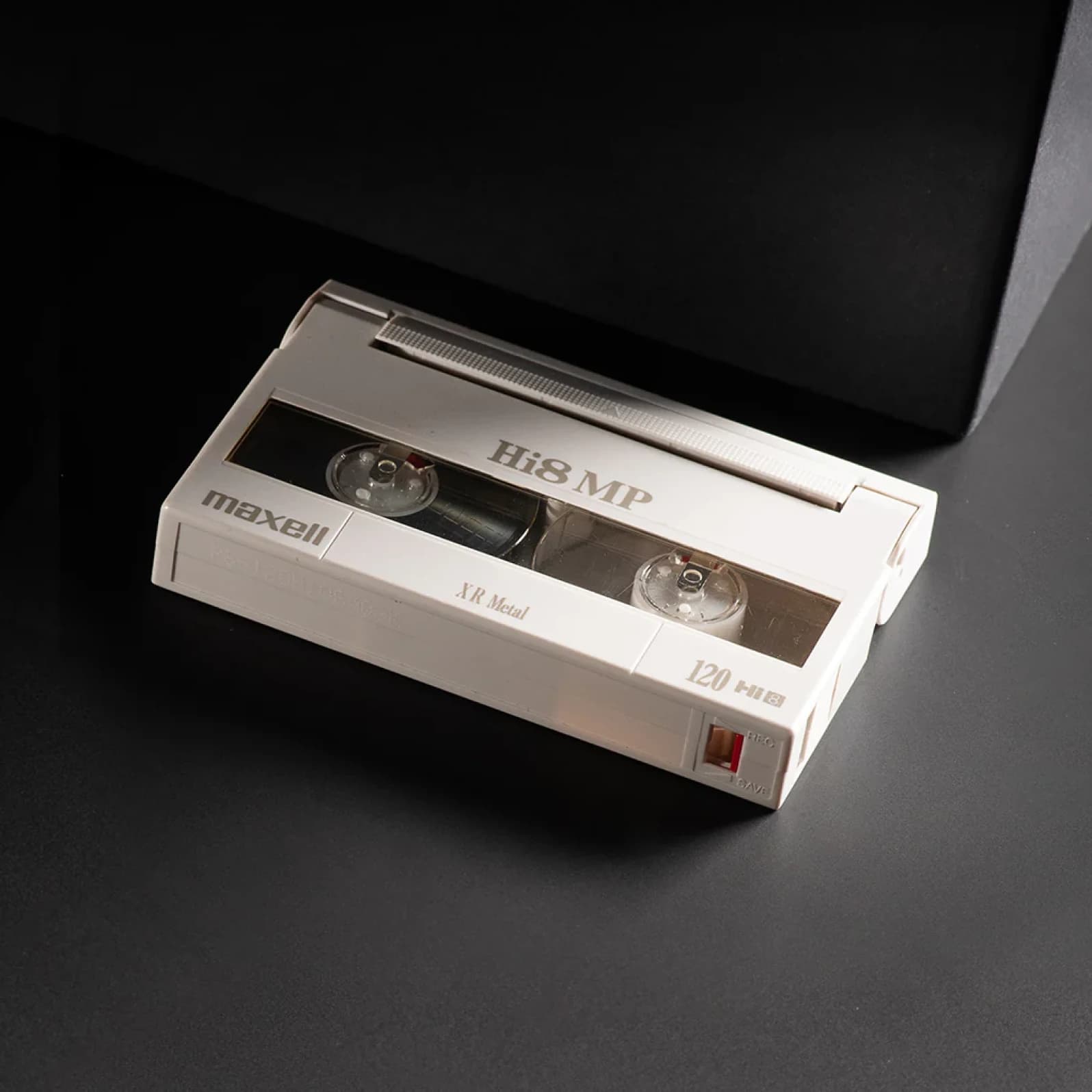
Camcorder tapes side by side
Video8, Hi8 and Digital8 share one cassette. Here they are next to other tapes, drawn to scale. Capture digitises every one of them.
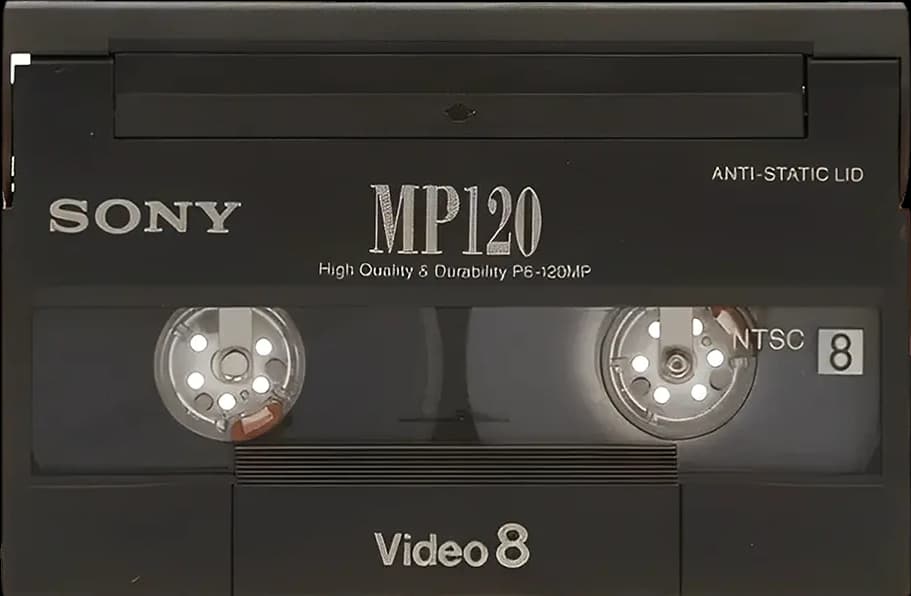
Video8
95×62.5 mm
This page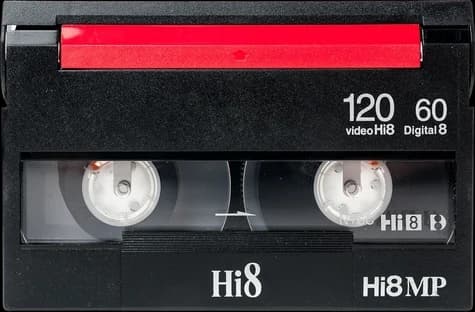
Hi8
95×62.5 mm
This page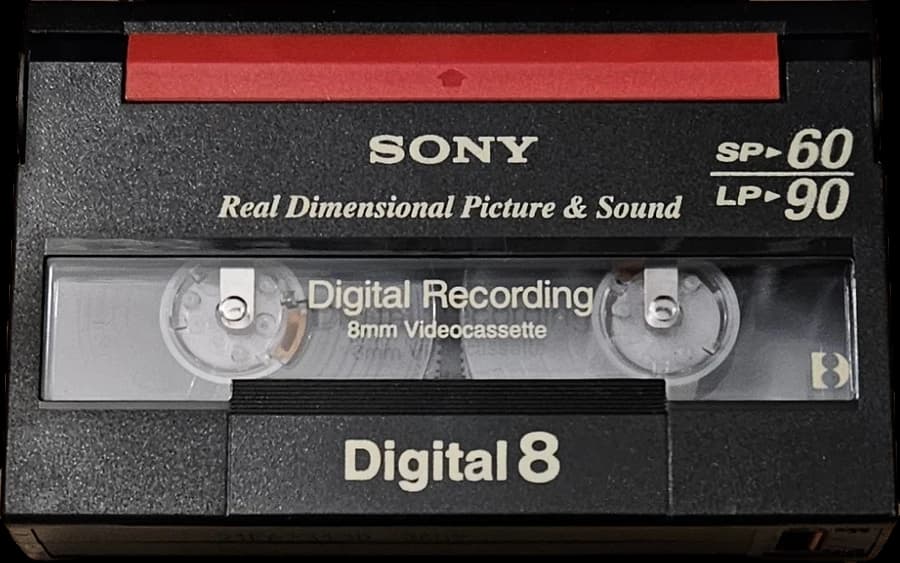
Digital8
95×62.5 mm
This page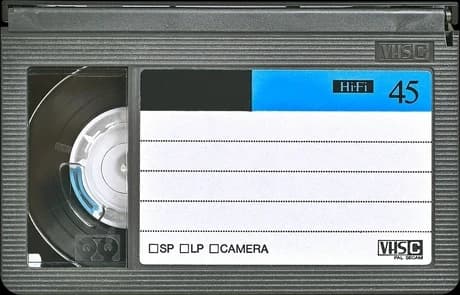
VHS-C
92×59 mm
Rival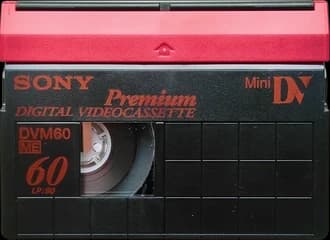
MiniDV
66×48 mm
Successor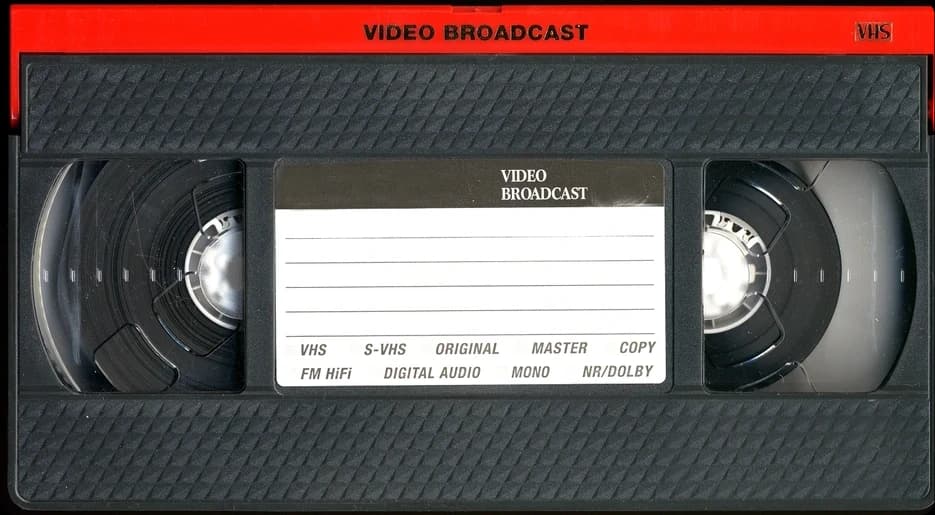
VHS
187×103 mm
For scale
Roughly to scale (shell width × height, in mm)
Photos via Wikimedia Commons: Digital8 — Inpriva (CC0)
§ 04 — How long can Hi8 tapes be preserved?
Videotape degradation
Tape Deterioration
The lifespan of a Hi8 tape is influenced by various factors, including storage conditions, usage and the quality of the tape itself.
Over time, Hi8 tapes can fade, lose audio quality and drop picture. How quickly depends on the tape, how it is stored and how often it is played. Poor storage can also lead to mould or tape breakage.
§ 05 — Playback and disposal
Before and after digitising
How do you play a Hi8 tape?
Hi8 tapes need a Video8 or Hi8 camcorder or deck. Most, though not all, Digital8 camcorders can also play analogue Video8 and Hi8 tapes.
Ageing machines and dirty heads can damage tape, so professional equipment is the safer choice.
Optional Post-Digitisation Destruction Methods
Using a degausser: disrupts the magnetic particles on the tape with a strong magnetic field, permanently deleting the data.
Physical destruction:shredding the tape to ensure the data cannot be recovered.
§ 06 — Options to think about when digitising your videotapes?
Bring Hi8 memories back to life
Hi8 camcorders and players have been out of production for years. Digitised, your tapes play on any phone, computer or TV and can be shared with family in a tap.
Tape Repair
HK$150/ tape
One flat price per Video8, Hi8 or Digital8 tape, whatever its length, delivered as MP4.
If a tape has mould or is broken, we inspect it and quote for cleaning and repair first.
Capture · Our team
Any Questions?
Feel free to contact
our Memory Specialists
Not sure what format you have or how best to handle it? WhatsApp us and one of the team will take a look.
WhatsApp us